
Addiction Counselling in Marylebone
Addiction rarely begins with a choice to become dependent. It often develops gradually as a way of managing pain, anxiety, stress or emotional difficulties that feel impossible to face directly. Counselling offers a confidential, non-judgmental space to explore what underlies your relationship with substances or behaviours, and to work towards change that is realistic and sustainable.

Addiction is more than a habit
Whether you are struggling with alcohol, drugs, gambling, pornography or another behaviour, addiction can leave you feeling trapped between wanting to stop and feeling unable to. It often carries significant shame, secrecy and confusion, alongside a genuine desire to change.
Loss of control
Using more than you intend to, or continuing despite repeated decisions to stop or reduce.
Compulsive use
Craving, preoccupation or a sense that you need the substance or behaviour to function or cope.
Impact on your life
Consequences affecting your relationships, work, health or sense of self, even as use continues.
Exploring what the addiction is managing.
Effective addiction counselling addresses more than the behaviour itself. It explores the emotional, relational and psychological factors that contribute to dependency, including anxiety, depression, trauma and shame.
The aim is not simply to stop a behaviour, but to understand what it has been doing for you, and to build more sustainable ways of managing your inner life.
Addiction often sits inside repeated patterns
Shame cycles: Feelings of guilt and self-disgust that can paradoxically fuel the behaviour you are trying to stop.
Avoidance: Using substances or behaviours to manage difficult emotions, memories or situations that feel unbearable.
Underlying anxiety or depression: Addiction often develops alongside or in response to other emotional difficulties that need their own attention.
Relapse and self-blame: Treating setbacks as evidence of failure rather than as part of a process, which can make recovery feel impossible.
Secrecy and isolation: Keeping the addiction hidden, which can deepen shame and make it harder to seek support.
Working towards change that lasts
Addiction counselling is not about willpower or moral judgement. It is about understanding the function of the addiction and addressing the difficulties that sustain it, with honesty, compassion and without shame.
- Understand what drives the addiction and what it manages
- Explore underlying anxiety, depression or trauma
- Reduce shame and develop self-compassion
- Build more effective ways of managing difficult emotions
- Work towards sustainable change at your own pace
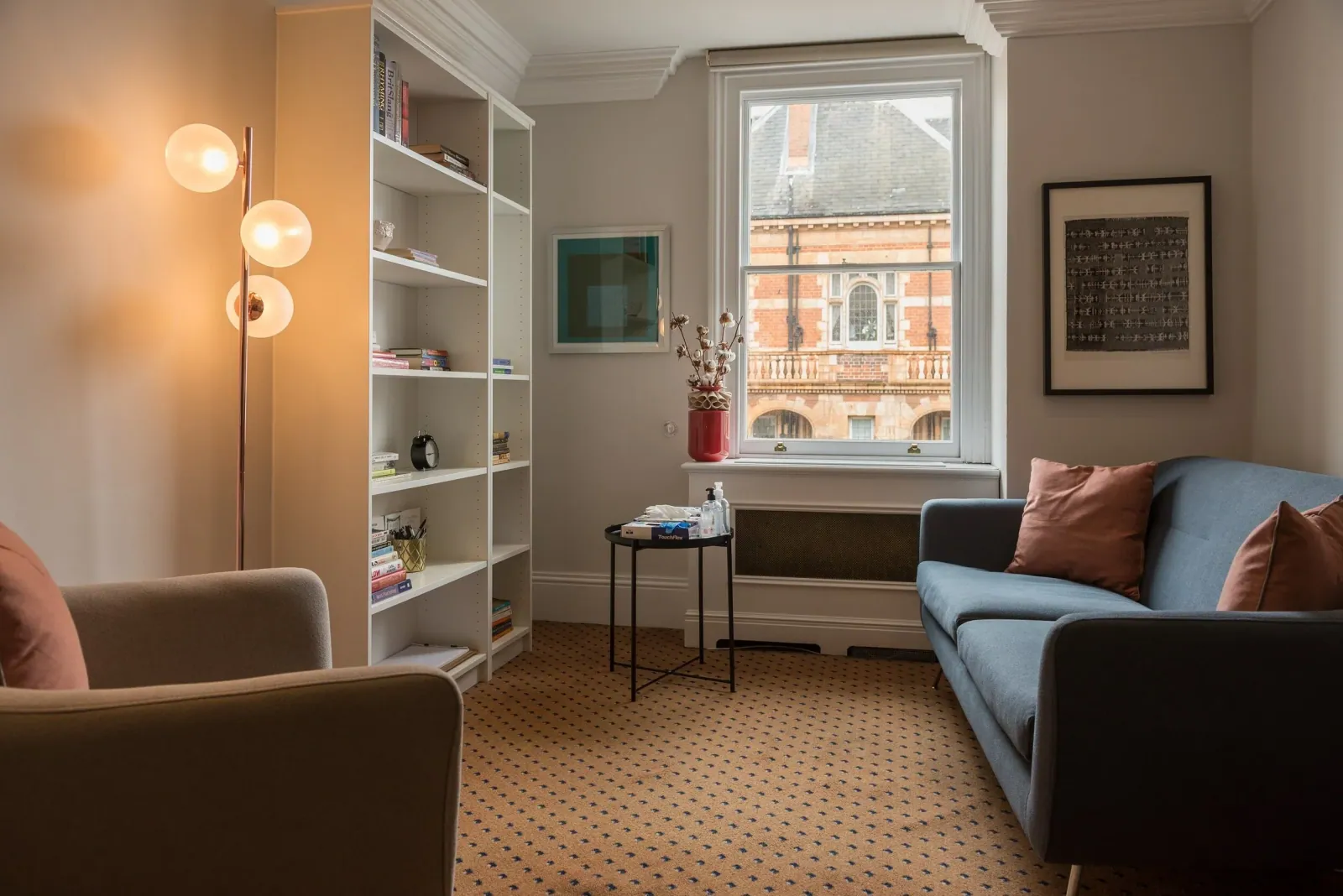
In-person in Marylebone W1 or online
Sessions are available from therapy rooms in Marylebone W1, close to Harley Street, Queen Anne Street and Manchester Square. Online sessions are also available for those who need discretion or flexibility.
Marylebone W1
Private in-person therapy at 37 Queen Anne Street and 4 Manchester Square, W1.
Online Therapy
Confidential remote sessions for those who need privacy or greater flexibility.
Articles on addiction, recovery and change
Addiction and Shame
Why shame often makes addiction worse, and what helps instead.
Underlying Causes
Understanding what addiction is really trying to manage beneath the surface.
Recovery and Identity
How therapy supports lasting change, not just abstinence.
Looking for therapy in Marylebone?
Contact Jonathan Cullen MBACP to ask about availability, fees, in‑person sessions in W1 or online therapy.
